
What to Expect at Your First Pickleball Open Play Session
Open play is the fastest way to get good at pickleball. Here's exactly how it works, how partners get matched, and how to handle your first session as a complete beginner.
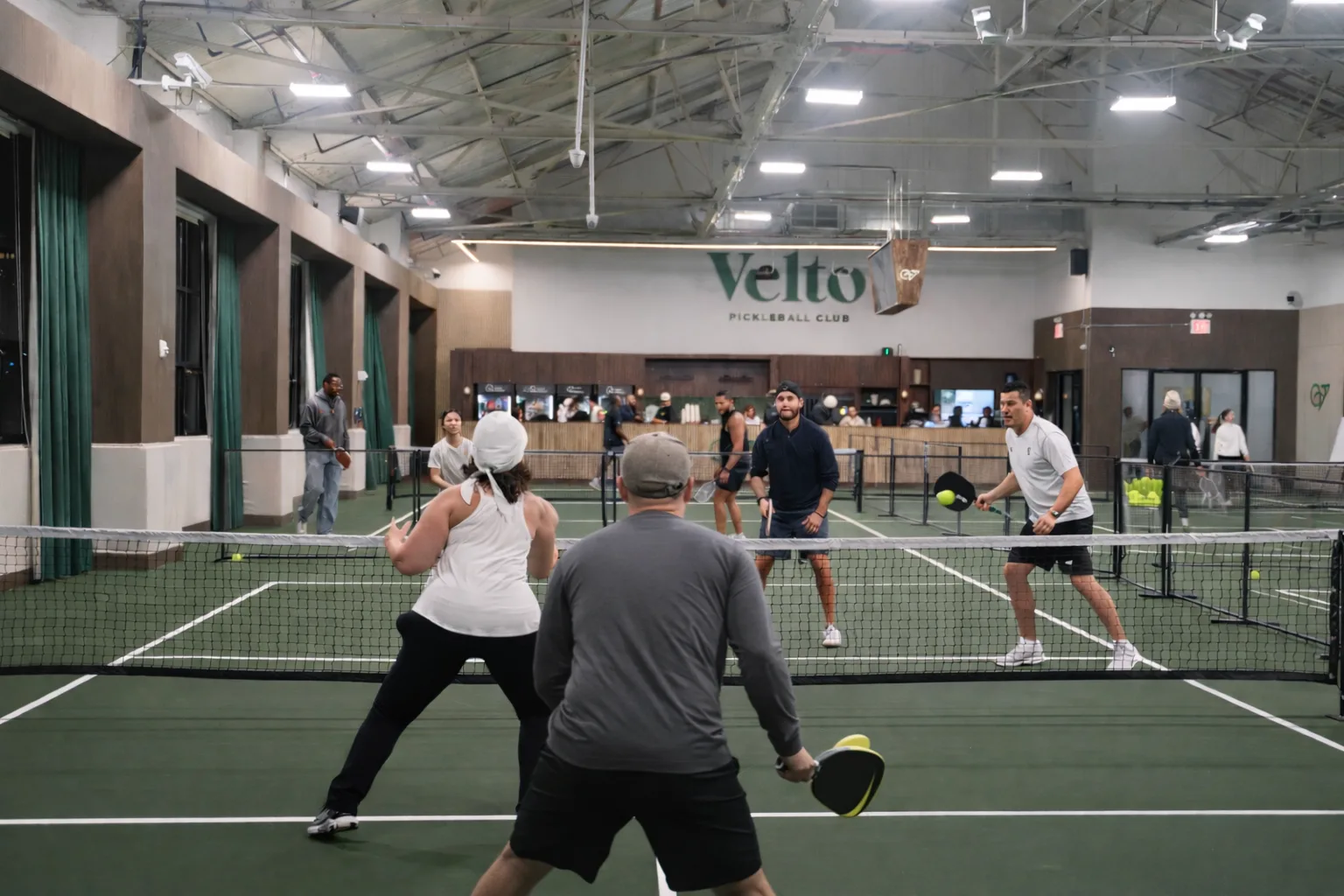
The single best thing you can do for your pickleball game is play more games against more opponents. That's exactly what open play is for. Show up, get matched with other players, rotate partners and opponents every few games, and walk out two hours later having played five or six matches against people you'd never have met otherwise.
If you've never been to an open play session before, the whole concept can feel intimidating. Here's a complete walkthrough of what actually happens, so you can show up to your first one knowing exactly what to do.
How open play works
Most pickleball clubs run open play in 90-minute or 2-hour blocks, sorted by skill level. You'll see sessions labeled something like "2.5–3.0" (beginner to advanced beginner), "3.0–3.5" (intermediate), or "3.5+" (intermediate to advanced). Your DUPR or self-rated level determines which session you join.
When you arrive, you check in, drop your bag, and head to the courts. The first 5–10 minutes is usually informal warm-up — players paddle-tap with whoever's around, practice dinks, and get loose. After warm-up, the rotation starts.
The rotation: how partners get matched
Most open play uses one of three rotation systems:
- Paddle stack — Players put their paddles in a rack in the order they arrived. When a court opens, the next four paddles in the stack go play. Winners stay on, losers cycle back into the stack.
- Round robin — A pre-set rotation where everyone plays everyone, organized by the staff. More common in structured leagues than casual open play.
- Challenge court — Winners stay, losers come off, and a new pair joins from the queue. Common in busier sessions with limited court time.
At Velto, the rotation is designed to keep everyone playing as much as possible — minimal sideline time, frequent partner changes, and skill-level grouping so you're always playing competitive games.
Solo vs. coming with friends
Both work. If you come solo, you'll be matched in immediately with whoever else is at your level — that's the whole point of open play. If you come with a friend or two, you can ask to play together for the first few games to warm up, but most rotations will eventually split you across courts to keep things mixed.
Honestly, going solo is the fastest way to get good. You'll be forced to communicate with new partners every 20 minutes, which builds the on-court communication skills that separate intermediate players from beginners.
Etiquette: how to fit in fast
- Call the score before every serve, loudly enough for both teams to hear.
- If a ball rolls onto your court from another game, stop the point and yell "ball!" to your neighbors.
- Don't coach your partner mid-rally. Save tips for after the game, and only if they ask.
- Paddle-tap your opponents and your partner at the end of every game — it's the pickleball equivalent of a handshake.
- If you're new, just tell people. Everyone was new once and most regulars are happy to help.
What to wear and bring
- Non-marking court shoes (running shoes work for your first time; lateral-support shoes are better long-term).
- Athletic clothing — shorts or leggings, a t-shirt or tank.
- A water bottle. You'll sweat more than you expect.
- Your paddle, if you have one. Most clubs lend paddles for free.
How tired you'll actually be
Pickleball doesn't look strenuous from the sideline, but two hours of doubles will leave you sore in places you didn't know you had. The constant short bursts of lateral movement, combined with the squat-and-explode mechanics of dinking, work muscles that most other sports skip. Expect to be sore for a couple of days after your first session — then it gets dramatically easier.
The bottom line
Open play is the single highest-leverage activity for any pickleball player below 4.0. Cheaper than lessons, more game reps than drilling alone, and a built-in social scene that turns a hobby into a community.
If you're in Brooklyn, open play at Velto runs daily across multiple skill levels in a four-court indoor facility in Red Hook. Free paddle and ball rentals, app-based booking, skill-matched sessions — everything designed to get a brand-new player from "I don't know the rules" to "I'm playing real games" in a single visit.