
Laykold vs. Other Pickleball Court Surfaces: A Player's Guide
Court surface affects how the ball bounces, how your knees feel after two hours, and how true your dinks land. Here's a no-nonsense look at the major pickleball surfaces.
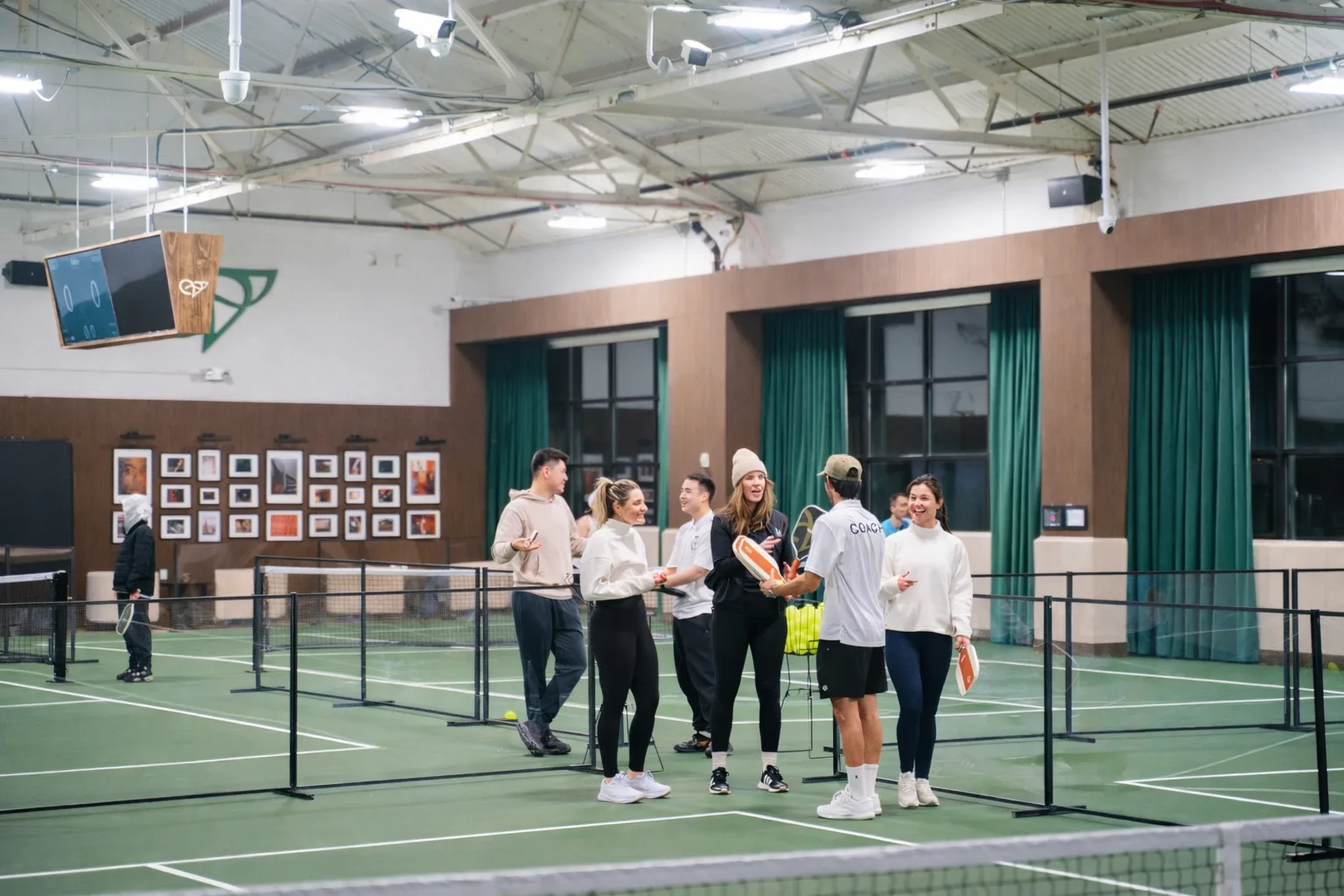
Court surface is the most underrated variable in pickleball. Players obsess over paddles and balls, but the surface you're playing on affects every shot — how high the ball bounces, how true it rolls off a slice, how much your knees ache the morning after a two-hour session.
Here's a quick guide to the major pickleball court surfaces you'll encounter in 2026, with honest pros and cons of each.
Cushioned acrylic systems (Laykold, Plexipave, Nova)
These are purpose-built tennis and pickleball surfaces, made of multiple layers of acrylic and rubber over an asphalt or concrete base. Laykold Cushion Plus — used at Velto and many of the top dedicated pickleball clubs in NYC — is one of the most common in the cushioned tier.
Pros: Excellent ball bounce consistency. Cushioned underfoot, which is significantly easier on knees and ankles than bare concrete. Used at tournament venues, so the way the ball plays matches what you'll experience at high-level events.
Cons: Expensive to install. Requires professional resurfacing every 5–8 years. Not what you'll find at a recreational gym that added pickleball lines as an afterthought.
Hard acrylic (uncushioned)
Same acrylic paint as the cushioned systems, but without the rubber and foam underlayment. Common at outdoor public courts and budget indoor facilities.
Pros: Cheaper than cushioned systems. Consistent ball bounce. Easy to maintain.
Cons: Hard on joints, especially in longer sessions. Most players notice the difference after about 90 minutes of play.
Concrete (painted)
Bare concrete with court lines painted on it. Common in repurposed warehouse facilities or makeshift indoor courts.
Pros: Cheapest possible surface. Durable.
Cons: Brutal on joints. Slippery when dusty. Ball bounce can be inconsistent depending on how flat the concrete actually is.
Hardwood (gym floor)
The classic basketball gym floor, often with pickleball lines taped or painted on top of the basketball lines.
Pros: Decent for your joints. Available wherever there's an existing gym.
Cons: Ball bounce is noticeably different from acrylic surfaces — usually a bit lower and faster. Visual clutter from competing sport lines can mess with depth perception, especially for newer players.
What it actually means for your game
If you're a casual social player who plays an hour a week, surface mostly affects how sore your knees are afterward. Pick the surface that hurts least, which is almost always cushioned acrylic.
If you're playing competitively or preparing for tournaments, surface matters more. Practice on a surface that matches the surface you'll compete on. For most NYC tournaments, that means cushioned acrylic.
If you have a history of knee, ankle, or hip issues, surface matters most of all. Cushioned acrylic systems are the only surfaces that will let you play 4–6 hours a week long-term without flare-ups for most players.
Does the surface matter more indoors?
Indoors, surface choice matters even more than outdoors, because there's no wind or sun to blame a bad bounce on — what you feel underfoot and off the paddle is entirely the floor. A cushioned acrylic system like Laykold gives a consistent, slightly slower bounce that rewards the soft dinks and resets that define indoor play, and the cushioning is what makes back-to-back winter sessions sustainable when you're playing three or four times a week instead of waiting out the weather.
It also affects footing. A quality indoor acrylic surface has enough grip for the quick lateral pushes pickleball demands without being so sticky that it grabs your shoe and stresses a knee. Bare concrete and older gym floors tend to sit at one extreme or the other — too slick or too grabby — which is where most surface-related aches come from. If you play often, the floor is quietly the most important piece of equipment in the building.
How to tell what surface a club uses
Just ask — any reputable club will tell you immediately, and the answer is almost always on their website. Look for specific product names ("Laykold Cushion Plus," "Plexipave Court System") rather than vague terms like "professional surface." The specific name is a good signal that the club actually invested in the surface, rather than painting lines on whatever was already there.
At Velto Pickleball Club in Red Hook, Brooklyn, all four courts are Laykold Cushion Plus. The surface was a deliberate choice — it's what tournament players are used to, and it's what lets you play two-hour sessions multiple times a week without your joints filing a complaint.